Alibaba Cloud · Self-initiated trainee-period practice · Lead developer and platform operations owner · 2026.08 · Published: 2026-10-10
AI Challenge Operations Platform
A configurable internal platform connecting registration, team formation, topic selection, submissions and judging.
01 · Project overview
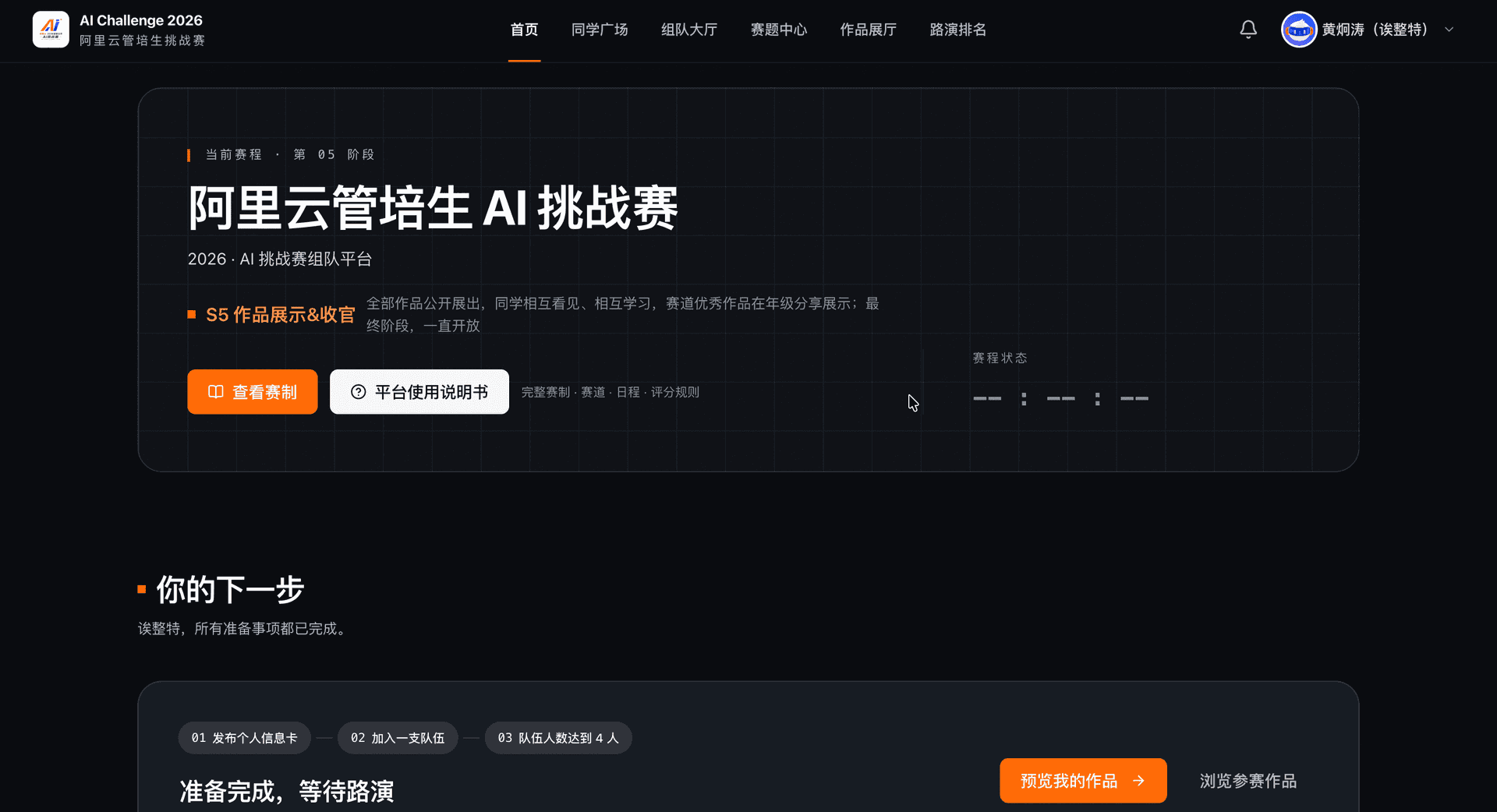
Running a competition requires coordination across schedules, teams, submissions and judges. Spreadsheets and group messages lacked shared state and a traceable workflow. I built an online lifecycle from team formation to judging and exhibition, showing each role what is available and what to do next.
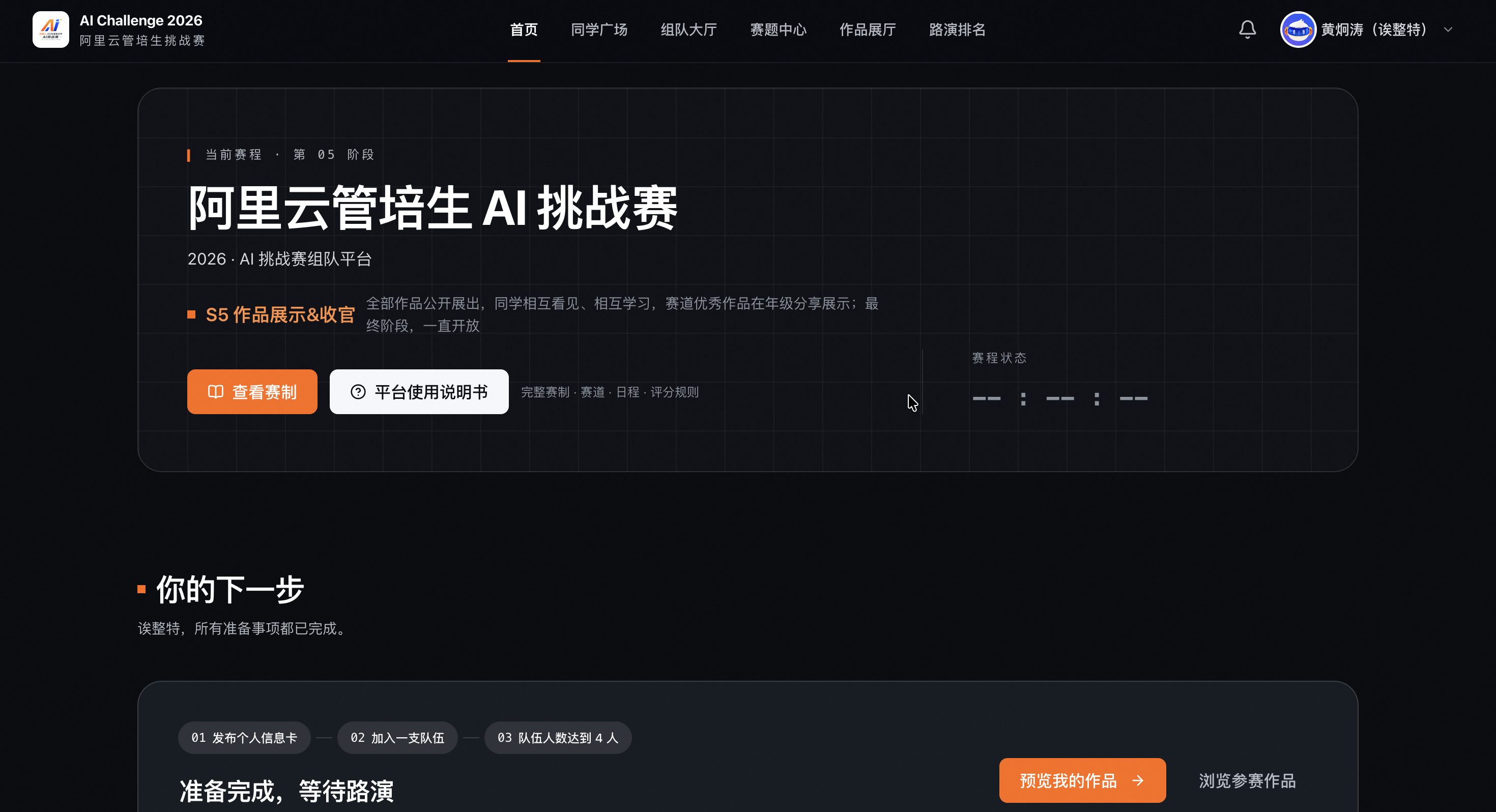
AI Challenge Operations Platform — screenshot 1
02 · My responsibilities
- Led development and operations, translating competition rules into working increments.
- Designed workflows and permission boundaries for trainees, class coordinators, administrators, super administrators and judges.
- Connected registration, teams, topics, submissions, judging and notifications.
- Iterated the design system, administration and document previews, with type and build checks before releases.
03 · Features and user journey
- Five configurable stages covering teams, proposals, knowledge submissions, judging and final uploads.
- People, team and topic discovery with filters, approvals, leader-only selections and quotas.
- Submission and exhibition workflows with withdrawal, edit locking, image/video and document previews.
- Judge-only scoring and track-specific rankings with finalized and average scores distinguished.
- Administrative approvals, identity simulation, configuration, notifications and export.
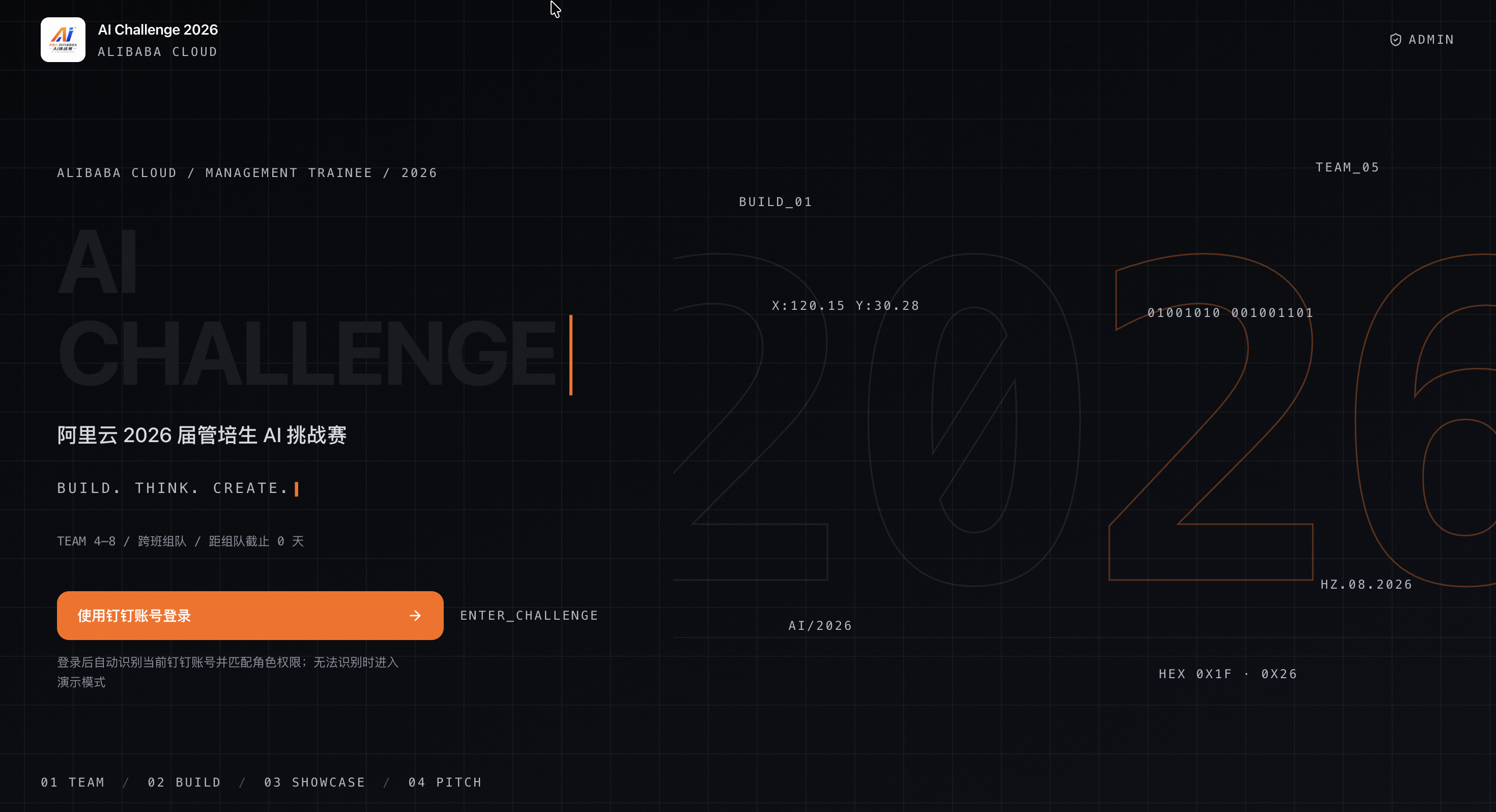
AI Challenge Operations Platform — screenshot 2
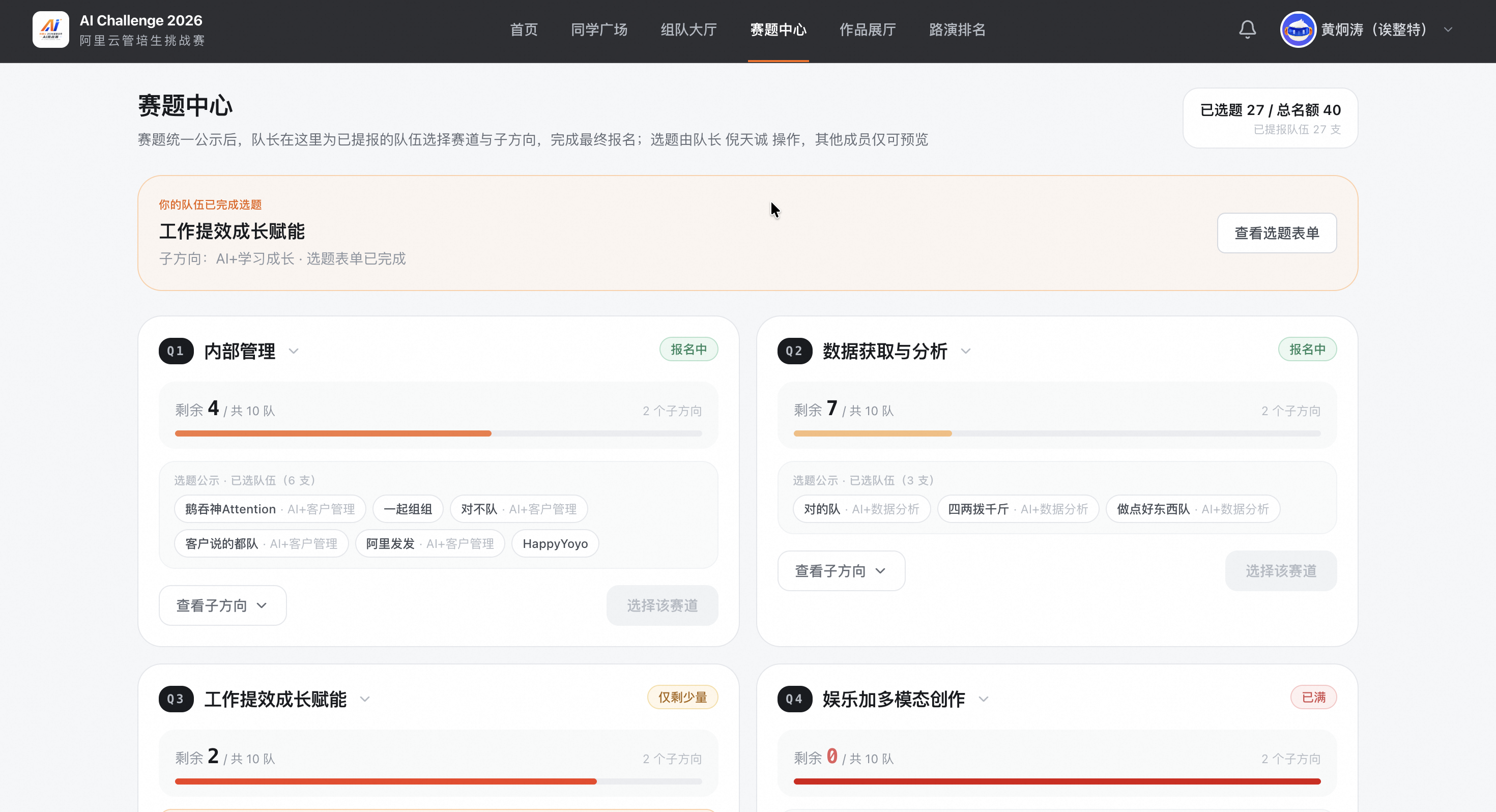
AI Challenge Operations Platform — screenshot 3
04 · Architecture and quality controls
React, TypeScript and Vite power the frontend, with FastAPI on the backend and STS-based direct uploads to OSS. Atomic SQL, row locks and unique constraints protect topic quotas and idempotency; composite keys prevent duplicate likes. Releases are validated in PRE before promotion to PROD and artifact verification.
05 · Iteration and outcomes
- The report records a 20-day development period, August 3–22, 2026.
- 164 commits and 126 version iterations spanning v11–v16.
- Five role-specific experiences, read-only visitors and 52 automated test cases.
- An end-to-end connection across competition workflows, permissions, notifications and exports.
06 · Reflection
This practice strengthened my focus on transparent rules, consistent stages and small verifiable increments. More features do not automatically mean a better product: participants and operators need to understand the state and complete the next step.
07 · Scope and source
This was a self-initiated or personally led practice during my Alibaba Cloud trainee period, supporting internal learning, collaboration or training rather than external client delivery. The account follows my project report dated October 10, 2026. Development and test figures describe that historical snapshot, not current production status. Screenshots come exclusively from my supplied folder; sensitive people and contact details are masked.