Cornell University · ECE 5725 · Embedded Systems Developer · 2025.05.10 · Published: 2025-05-20
ECE 5725: Design with Embedded Operating Systems Project
Designing embedded applications with Raspberry Pi, Linux, Python, and C++
01 · Course Introduction
ECE 5725: Design with Embedded Operating Systems is a graduate-level embedded systems course offered by Cornell University's School of Electrical and Computer Engineering.
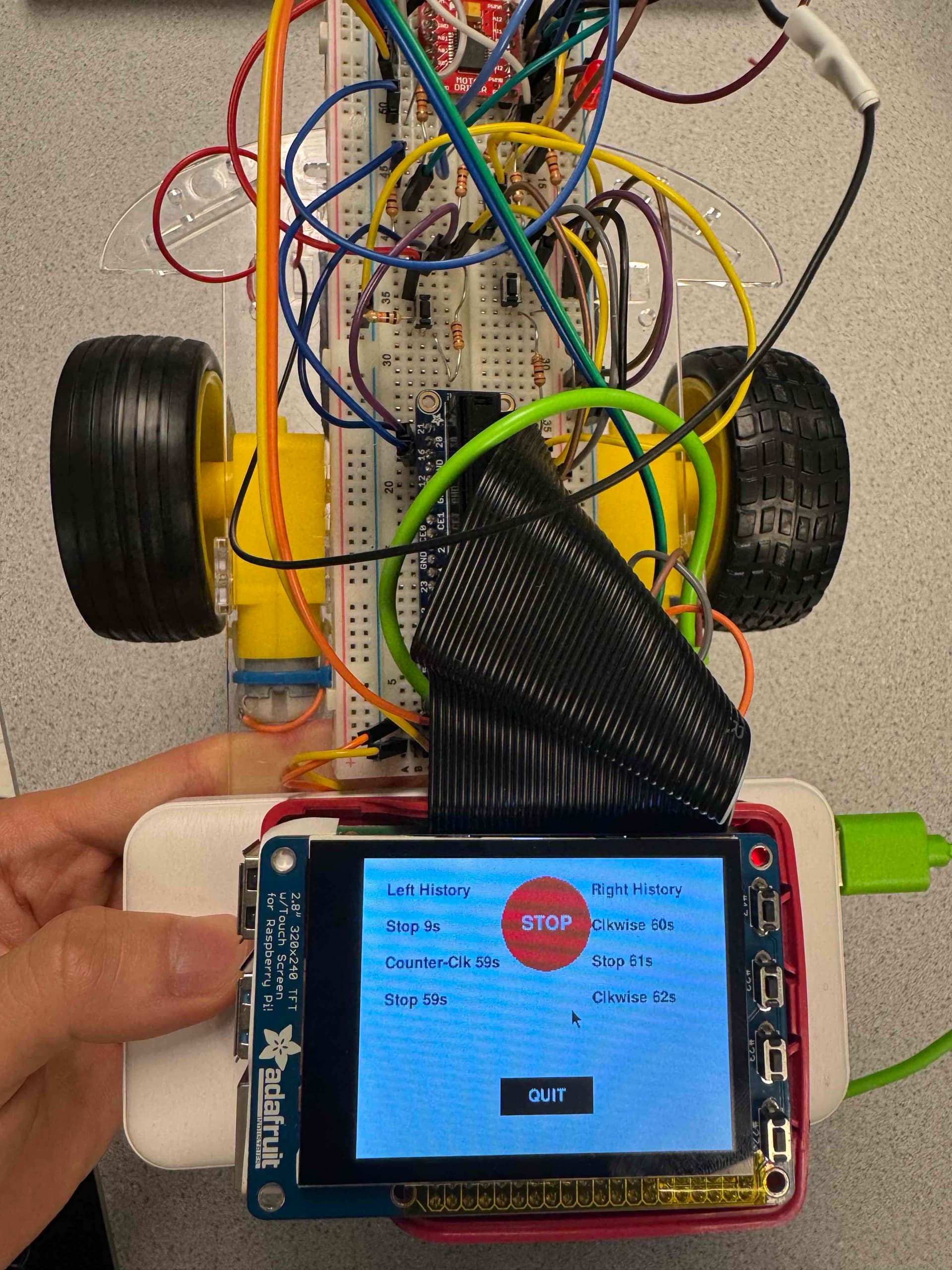
The course uses the Raspberry Pi 4B and Linux as its primary development platform, combining Python and C++ programming with hardware interfacing and embedded application design.
Unlike projects focused exclusively on low-level microcontroller control, the course emphasizes developing integrated applications within an embedded Linux environment. Hardware interfaces, system software, application logic, and user-facing functions are combined into complete embedded systems.
02 · Learning Objectives
The primary learning objectives included:
Becoming familiar with the Raspberry Pi 4B development environment
Managing files, processes, and permissions in Linux
Developing embedded applications using Python and C++
Connecting and controlling external hardware through GPIO
Understanding interactions between operating systems and hardware devices
Testing, debugging, and deploying embedded software
Developing hardware-software co-design and system integration skills
03 · Development Environment
The Raspberry Pi 4B served as the primary hardware platform, while system configuration and application development were completed within Linux.
The main technologies included:
Raspberry Pi 4B: Running applications and interfacing with external hardware
Linux: Managing files, permissions, processes, and runtime environments
Python: Rapidly implementing hardware control, data processing, and application logic
C++: Developing modules requiring greater performance or lower-level control
GPIO: Connecting buttons, LEDs, sensors, and peripheral devices
Shell: Configuring the system, executing programs, and supporting debugging
04 · Embedded Linux Practice
During the course, I gained experience in Raspberry Pi system configuration, SD-card backup and recovery, Linux permission management, and application environment setup.
The practical activities included:
Configuring the Raspberry Pi operating system
Managing files and directories through the command line
Setting file permissions with commands such as chmod
Compiling and running Python and C++ applications
Managing dependencies and runtime environments
Backing up and recovering Raspberry Pi SD cards
Diagnosing software issues through logs and terminal output
These activities provided a foundation for developing and maintaining embedded Linux systems.
05 · Hardware-Software Integration
The course projects required software applications to interact with physical hardware. Programs received external inputs, processed information, and controlled corresponding outputs.
A typical system workflow consisted of:
A sensor or hardware component generates an input
The Raspberry Pi reads the input through GPIO or another interface
A Python or C++ application processes the data
The system makes a decision based on the programmed logic
An actuator, display, or other device produces an output
The system records and presents its operating status
This process strengthened my understanding of the relationship between input, processing, and output in embedded systems.
06 · Software Design
The course emphasized modular software architecture, separating system responsibilities into relatively independent components.
The main software components included:
Hardware interface initialization
Input data acquisition
Data processing and state evaluation
Application control logic
Output device control
System status recording
Exception handling and recovery
Python supported rapid prototyping and application development, while C++ could be used for components requiring stronger performance or more precise resource control.
07 · System Debugging
Debugging embedded systems requires simultaneous consideration of both software and hardware behavior.
Typical development challenges included:
Incorrect GPIO configuration
Insufficient file or execution permissions
Inconsistencies between hardware connections and pin definitions
Missing dependencies or runtime configuration
Unstable input readings
Incorrect program execution order
Repeated use of system resources
Failure to recover after abnormal program termination
I used terminal output, system logs, modular testing, and hardware inspection to locate problems. Individual modules were verified before integration into the complete system.
08 · Course Outcome
Through ECE 5725, I developed a stronger understanding of embedded Linux application development and the relationship between operating systems, software applications, and physical hardware.
The course strengthened my abilities in:
Raspberry Pi application development
Linux command-line and permission management
Python and C++ programming
GPIO hardware interfacing
Modular embedded software design
Hardware-software system integration
Application testing and troubleshooting
Embedded system deployment and maintenance
This experience expanded my skills from microcontroller programming to operating-system-based embedded application design and prepared me for developing more complex integrated systems.