Southwest Jiaotong University · Individual Research Project · Independent Researcher · 2022.08-2023.06 · Published: 2023-12-31
Research on Driver Fatigue Monitoring System Based on Machine Learning
A multimodal machine learning system for accurate and robust driver fatigue detection
01 · Project Information
Project Duration: August 2022 - June 2023
Role: Individual Project
Advisor: Prof. Yi Zhang, Southwest Jiaotong University
02 · Project Overview
This research focused on developing an advanced driver fatigue monitoring system using machine learning. The objective was to identify early physiological and behavioral signs of fatigue through data-driven analysis and improve road safety.
The system analyzed multiple sources of data, including:
Facial expressions
Eye movements
Head motion
EEG signals
Steering-wheel interactions
Driving behavior
A complete machine learning pipeline was developed, covering data collection, preprocessing, feature extraction, feature selection, model training, optimization, and fatigue prediction.
03 · Project Background
Driver fatigue is a major risk to road safety. As fatigue increases, drivers may exhibit changes in blinking patterns, eye-closure duration, yawning, head movement, brainwave activity, reaction time, and steering behavior.
Systems relying on only one type of data may be affected by lighting, driver posture, individual differences, or sensor noise.
This project therefore adopted a multimodal approach that combined visual, physiological, and behavioral information to improve detection accuracy and robustness.
04 · Project Objectives
The primary objectives were to:
Develop a robust fatigue-detection system using multimodal sensor data
Improve preprocessing and feature-selection methods
Compare multiple machine learning and deep learning algorithms
Identify an effective approach to fatigue detection
Improve model accuracy, generalization, and data efficiency
Evaluate the feasibility of real-time in-vehicle deployment
05 · Machine Learning Pipeline
The system followed the process below:
Collect multimodal driver data
Clean incomplete and abnormal records
Synchronize data from different sources
Reduce sensor noise
Normalize the processed data
Extract fatigue-related candidate features
Select the most relevant features
Train and compare multiple models
Optimize the model hyperparameters
Evaluate model accuracy and generalization
Output the predicted driver-fatigue state
06 · System Modules
The system consisted of four core functional modules:
Multimodal data collection
Data preprocessing
Feature extraction and selection
Model training and optimization
Module 1: Multimodal Data Collection
The project aggregated more than 500 GB of multimodal data describing physiological and behavioral changes under different fatigue conditions.
The data sources included:
Facial Cameras
Facial-camera data was used to analyze:
Blink frequency
Blink duration
Eye-closure state
Yawning behavior
Facial fatigue indicators
Saccadic eye movements
Head-Tracking Sensors
Head-tracking data was used to measure:
Head nodding
Orientation changes
Head angles
Micro-sleep-related movements
EEG Devices
EEG data was used to examine fatigue-related brainwave activity, including:
Theta-band activity
Alpha-band activity
Beta-band activity
Energy changes across frequency bands
Steering and Driving-Behavior Sensors
Driving-behavior data was used to analyze:
Steering-wheel movement
Control reaction time
Steering-correction frequency
Abnormal control behavior associated with fatigue
The multimodal dataset described driver condition from visual, physiological, and behavioral perspectives.
Module 2: Data Preprocessing
Raw sensor data contained noise, missing values, outliers, and synchronization inconsistencies.
The preprocessing pipeline included:
Kalman filtering for noise reduction
Wavelet transformation for signal denoising
Outlier removal
Data normalization
Missing-data handling
Time-series synchronization
Processed-data integrity checks
After preprocessing and standardization, the system achieved 99.5% data integrity.
Module 3: Feature Extraction and Selection
More than 50 fatigue-related features were extracted from the multimodal dataset.
The main feature groups included:
Eye and Facial Features
Blink frequency
Blink duration
Eye-closure proportion
Saccadic eye movement
Yawning frequency
Facial fatigue variation
Head-Movement Features
Head pitch
Head orientation
Head-movement frequency
Nodding behavior
Micro-sleep indicators
EEG Features
Theta-band energy
Alpha-band energy
Beta-band energy
Ratios between EEG frequency bands
Time-dependent EEG trends
Driving-Behavior Features
Steering-wheel movement amplitude
Steering-correction frequency
Driver reaction time
Fatigue-related control anomalies
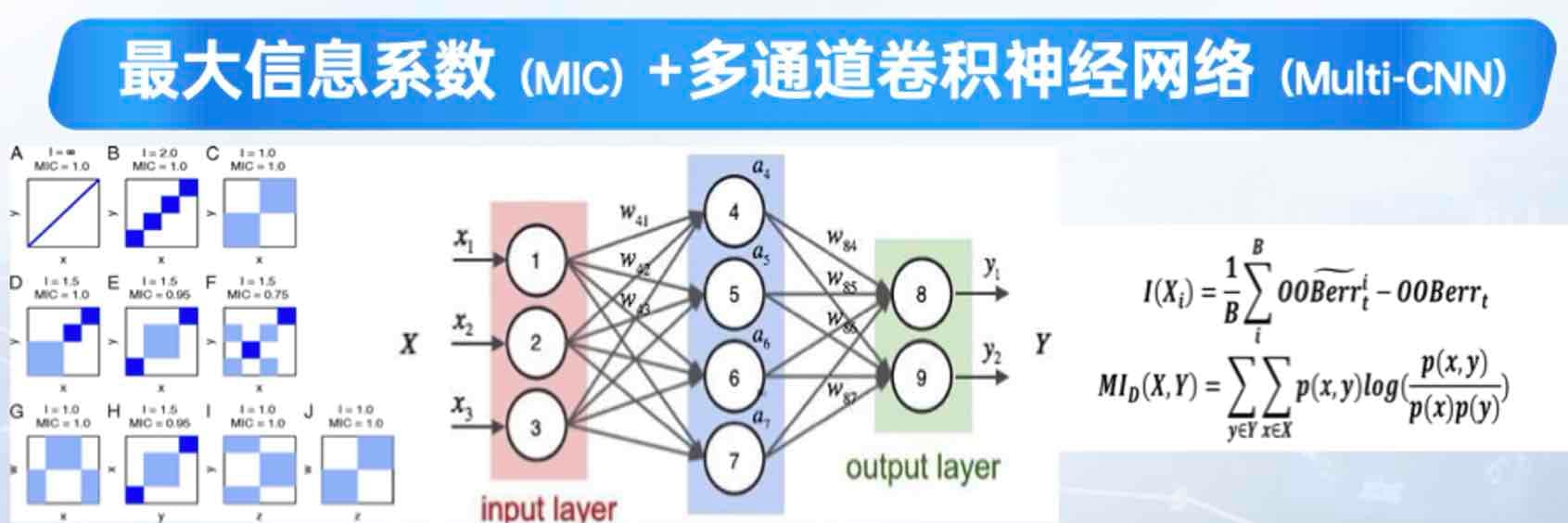
Principal Component Analysis and Recursive Feature Elimination were used to select the most relevant features:
PCA: Reduced dimensionality while preserving important information
RFE: Recursively removed less important features according to model performance
The process identified more than 50 key features and achieved a 98% feature-selection accuracy rate.
Module 4: Model Training and Optimization
More than 10 machine learning and deep learning algorithms were evaluated.
Supervised Learning Models
Support Vector Machine
Random Forest
XGBoost
LightGBM
Logistic Regression
Deep Learning Models
Convolutional Neural Networks
Recurrent Neural Networks
Long Short-Term Memory networks
Hybrid Approaches
The project also explored hybrid methods combining traditional machine learning with deep learning to use their complementary strengths in feature analysis and temporal modeling.
07 · Model Optimization
Several methods were used to optimize and validate the models:
Grid search
Bayesian optimization
Cross-validation
Training with diverse datasets
Model-parameter comparison
Feature-combination experiments
Classification error analysis
More than 200 experimental runs were conducted to compare models, tune hyperparameters, and evaluate system performance.
The optimized system achieved:
95% fatigue-detection accuracy
A 15% performance improvement over baseline models
A 20% improvement over previous fatigue-detection models
08 · Real-Time Application Design
The research also considered the feasibility of deploying the system in a real-time vehicle environment.
A real-time implementation would need to:
Continuously receive multimodal sensor data
Perform rapid cleaning and synchronization
Extract fatigue-related features
Run the trained prediction model
Output the current driver state
Trigger an alert when fatigue is detected
The modular architecture allows the data-collection, feature-processing, and prediction modules to be independently optimized or replaced for future in-vehicle deployment.
09 · Challenges and Solutions
10 · My Responsibilities
As an independent research project, I was responsible for:
Reviewing driver-fatigue monitoring methods
Designing the complete machine learning pipeline
Organizing multimodal fatigue datasets
Cleaning, normalizing, and synchronizing the data
Designing and extracting fatigue-related features
Applying PCA and RFE for feature selection
Training and comparing different machine learning models
Optimizing model hyperparameters
Conducting more than 200 experimental runs
Analyzing model accuracy and generalization
Evaluating the feasibility of real-time deployment
Preparing the research results and project documentation
11 · Key Contributions and Outcomes
Developed a complete machine learning pipeline for driver-fatigue detection
Designed four core functional modules
Processed more than 500 GB of multimodal data
Achieved 99.5% processed-data integrity
Extracted more than 50 fatigue-related features
Achieved a 98% feature-selection accuracy rate
Evaluated more than 10 machine learning and deep learning algorithms
Conducted more than 200 model-training and optimization experiments
Achieved 95% fatigue-detection accuracy
Improved performance by 15% over baseline models
Outperformed previous models by 20%
Designed a modular architecture for future real-time deployment
12 · Project Impact
The project demonstrated the value of multimodal machine learning for driver-fatigue detection.
By combining visual, physiological, and behavioral information, the system reduced the limitations associated with individual data sources and evaluated driver condition from multiple perspectives.
Potential applications include:
Intelligent driver-monitoring systems
Commercial vehicle safety management
Long-distance transportation alerts
Intelligent vehicle cockpits
Fleet risk management
Intelligent transportation safety systems
13 · Conclusion
This research developed a driver-fatigue monitoring system based on machine learning and multimodal data analysis.
The project established a complete pipeline from data collection and preprocessing to feature selection, model training, optimization, and prediction. More than 200 experiments were conducted to evaluate and improve the performance of different algorithms.
Through the project, I strengthened my skills in machine learning, multimodal data processing, time-series synchronization, feature engineering, model optimization, and performance evaluation. I also developed greater experience in independent research, experimental design, and complex data analysis.
14 · Future Work
Future development could focus on:
Deploying the model in real-time vehicle systems
Using edge computing to reduce prediction latency
Optimizing deep learning architectures for real-time processing
Increasing the diversity of drivers and driving conditions in the datasets
Developing personalized driver-fatigue baselines
Applying model compression for in-vehicle hardware
Integrating Explainable AI to improve transparency
Validating the system under real-road and complex driving conditions